

Saturday 25th July is World Drowning Prevention Day, and this year's global theme is "Unite to turn the tide" - a reminder that water safety isn't one organisation's job. It's everyone's. Ours included.
So no offers today. No product talk. Just the things we genuinely want every paddler to know before they get on the water - because most of you were first-timers when you found us, and plenty of you are out there with your kids. These basics are for you.
1. Check before you go
Two minutes of checking saves hours of trouble. Look at the wind first - offshore wind is the one that catches paddle boarders out, because it feels calm at the shore and then quietly pushes you further out than you can paddle back. If the wind is blowing from the land towards the water, think twice. Check tide times on the coast, and river levels inland after heavy rain.
2. Tell someone where you're going
On the water is better in number but if you truly must go solo then tell someone where you are going? It takes ten seconds! Where you're launching, roughly where you're headed, when you expect to be back. If something does go wrong, that one message is the difference between a quick rescue and a long search.
3. Wear your leash - and wear the right one
Your board is your biggest flotation device, and your leash is what keeps you attached to it. On open water and at the coast, an ankle leash keeps your board within reach if you fall. But on rivers - anywhere with flowing water - a fixed ankle leash can be dangerous if it snags. That's where a quick-release leash matters: it keeps you connected to your board, but lets you free yourself instantly if you need to.
"I like the quick release ankle leash, it makes me feel safe."
— Kieran, Wave customer

4. If you fall in unexpectedly - float first
Cold water shock is real, even in a British summer. If you end up in the water unexpectedly, your instinct will be to thrash and swim hard. Don't. The RNLI's advice is simple: float to live. Lean back, spread your arms and legs, and let the initial shock pass - it takes about 60 to 90 seconds. Once your breathing is under control, then get back to your board or swim to safety.
5. Keep children within arm's reach
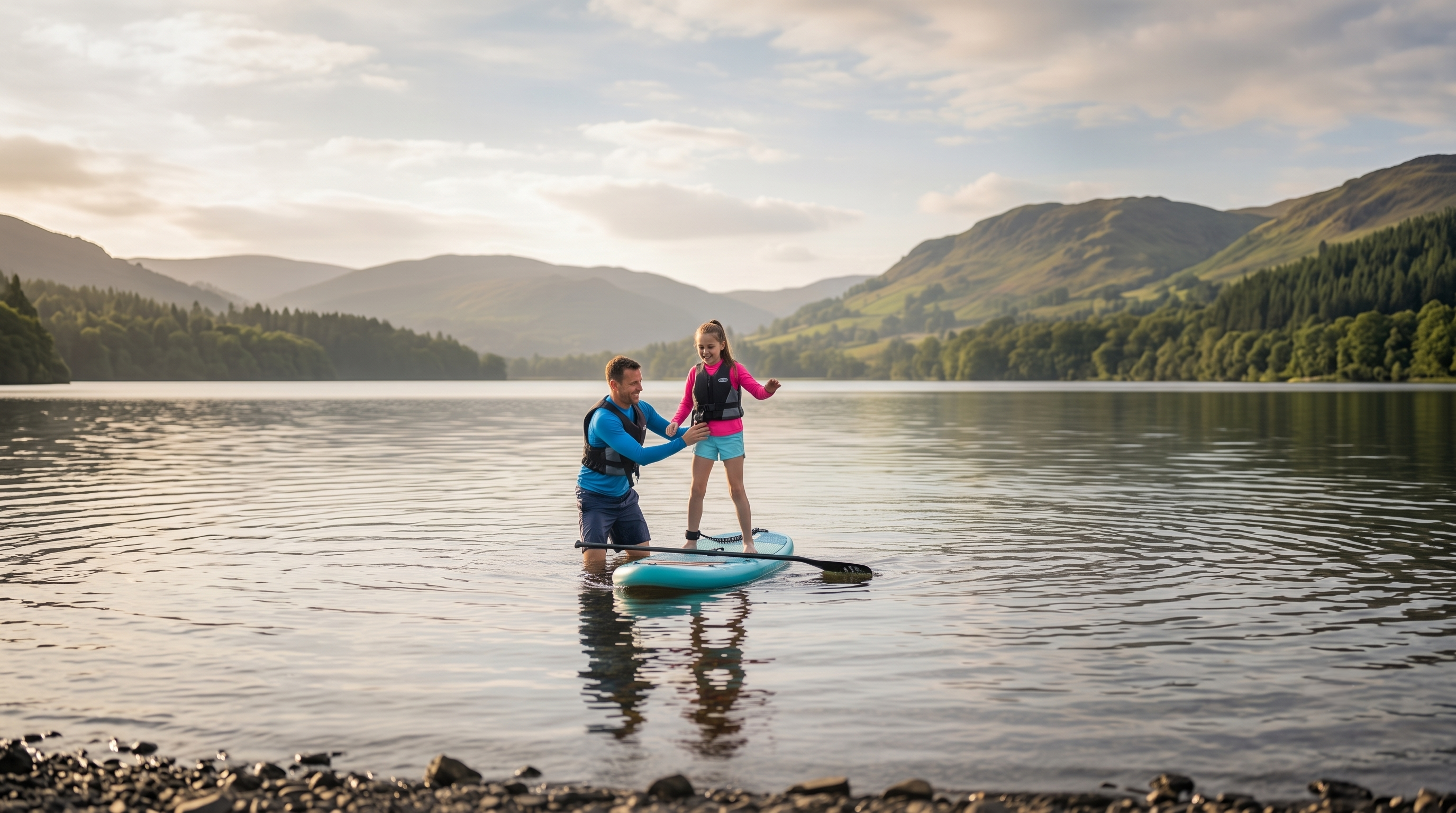
Drowning is fast and it is silent - there's rarely shouting or splashing. If you're out with kids, active supervision means eyes on them, phones away, and little ones within arm's reach. Buoyancy aids on children near water, every time, no exceptions - even strong little (and big!) swimmers.
6. Know who to call
In the UK, if you see someone in trouble in the water, call 999 and ask for the Coastguard at the coast, or the Fire Service inland. Don't go in after them - throw something that floats, keep talking to them, and keep your eyes on their position.
Most of our customers are first-timers and families. That's exactly who this day is for - the people newest to the water are the ones these basics protect most. Learn them, share them, and pass them on to whoever you paddle with.
That's how we all turn the tide.
See you on the water - safely.
Team Wave
For more on World Drowning Prevention Day, visit the WHO campaign page. For UK water safety advice, the RNLI's Float to Live guidance is the gold standard.
Share:
The best part of summer happens before everyone else wakes up